

The Toyota Fortuner is widely recognized for its rugged durability, off-road dominance, and long-term reliability. Built on a ladder-frame chassis derived from the Hilux platform, it is engineered for endurance. However, even this highly dependable SUV exhibits recurring mechanical and operational issues that every owner and buyer must understand in depth.
This comprehensive guide delivers a superior, data-driven breakdown of Toyota Fortuner problems, including root causes, real-world symptoms, and precise solutions.
Toyota Fortuner Reliability Overview
The Toyota Fortuner maintains a strong reputation for durability, but its issues typically arise from:
- Heavy-duty usage (off-road, towing, rough terrain)
- Diesel engine complexity (DPF, injectors, turbo systems)
- Wear-and-tear in suspension and braking systems
- Environmental exposure (heat, dust, humidity)
Despite its reliability, these factors contribute to predictable problem patterns across different model years.
1. Suspension Wear and Ride Quality Issues


Symptoms
- Clunking noises over bumps
- Uneven tyre wear
- Reduced ride comfort
Causes
The Fortuner’s body-on-frame design prioritizes off-road strength over on-road comfort, resulting in faster wear of shock absorbers and bushings—especially on rough roads.
Solutions
- Replace worn bushings and shock absorbers
- Perform regular wheel alignment
- Inspect suspension every 15,000–20,000 km
2. Engine and Turbocharger Problems


Symptoms
- Loss of power
- Rough idling
- Excessive smoke
Causes
- Injector wear or fuel contamination
- Turbocharger degradation due to oil issues
- Carbon buildup in EGR systems
Modern diesel variants (2.4L and 2.8L GD engines) are particularly sensitive to fuel quality and maintenance intervals.
Solutions
- Use high-quality diesel fuel
- Replace injectors at high mileage
- Maintain strict oil change intervals
- Inspect turbo system during servicing
3. Transmission and Clutch Issues
Symptoms
- Jerky gear shifts
- Delayed acceleration
- Hard clutch pedal
Causes
- Worn clutch plates in manual variants
- Low or degraded transmission fluid
- Overheating in automatic transmissions
Urban traffic and heavy vehicle load accelerate transmission wear.
Solutions
- Replace clutch kits when required
- Service transmission every 40,000–60,000 km
- Monitor transmission fluid quality
4. Brake System Problems


Symptoms
- Squealing noise
- Vibrations during braking
- Reduced stopping power
Causes
The Fortuner’s heavy weight and frequent braking conditions lead to accelerated brake wear.
Solutions
- Replace brake pads regularly
- Resurface or replace brake discs
- Use high-quality brake components
Brake wear is a commonly reported issue, especially in urban driving conditions.
5. Electrical System and Battery Issues
Symptoms
- Battery drainage
- Faulty infotainment system
- Random warning lights
Causes
- Weak battery or corroded terminals
- Wiring issues
- Excessive accessory usage
Solutions
- Replace battery every 3–5 years
- Inspect wiring connections
- Perform periodic diagnostic scans
Electrical glitches are generally minor but frequent across multiple variants.
6. Cooling and Air Conditioning Problems
Symptoms
- Weak cooling performance
- Warm air from AC vents
Causes
- Refrigerant leaks
- Compressor wear
- Clogged cabin filters
Solutions
- Regular AC servicing
- Replace compressor if needed
- Clean or replace filters
This issue is particularly noticeable in hot climates with prolonged usage.
7. Diesel Particulate Filter (DPF) and EGR Issues
Symptoms
- Warning lights
- Reduced engine efficiency
- Increased fuel consumption
Causes
Short trips prevent proper DPF regeneration, leading to clogging and EGR carbon buildup.
Solutions
- Drive at highway speeds periodically
- Use premium fuel
- Clean EGR system at intervals
8. Rust and Corrosion Concerns


Symptoms
- Rust on underbody
- Paint bubbling
- Corrosion near wheel arches
Causes
- Exposure to moisture and road salts
- Lack of underbody protection
Solutions
- Apply anti-rust coating
- Wash underbody regularly
- Inspect chassis annually
Rust is more common in older models or vehicles exposed to harsh environments.
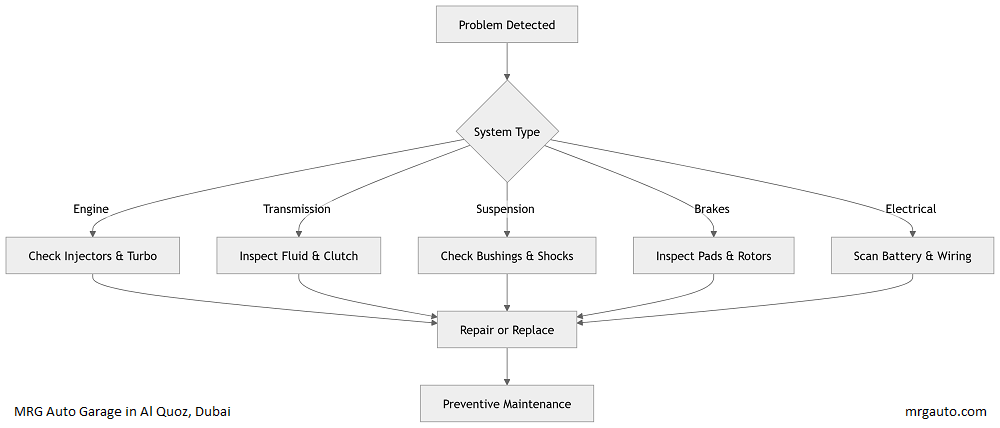
Toyota Fortuner Problem Diagnosis Flow
Model Year Insights: Which Fortuner Is Most Reliable?
Pre-2015 Models
- Strong reliability
- Higher fuel consumption
- Basic electronics
2016–2020 Models
- Improved engines (GD series)
- DPF and injector sensitivity
2021–Present Models
- Better refinement
- Occasional electronic and sensor issues
Preventive Maintenance Strategy
We follow a strict maintenance plan to ensure optimal performance:
- Engine oil change every 8,000–10,000 km
- Suspension inspection every 20,000 km
- Brake check every 10,000 km
- Injector and turbo inspection after 100,000 km
- AC servicing annually
Cost of Common Repairs
| Problem | Estimated Cost Level |
|---|---|
| Injector Replacement | High |
| Turbocharger Repair | High |
| Suspension Overhaul | Medium |
| Brake Replacement | Medium |
| Electrical Fixes | Low to Medium |
Is the Toyota Fortuner Reliable?
The Toyota Fortuner remains one of the most durable SUVs in its segment. Its problems are largely predictable and manageable with disciplined maintenance. Most issues stem from usage intensity rather than inherent design flaws.
Owners who follow preventive servicing and address early symptoms can expect exceptional longevity, often exceeding hundreds of thousands of kilometers without major failures.
The Toyota Fortuner delivers unmatched toughness, reliability, and resale value, but demands informed ownership. By understanding its most common problems and implementing targeted solutions, we ensure maximum lifespan, consistent performance, and minimized repair costs.
This guide provides a definitive, expert-level resource to maintain, diagnose, and confidently own a Toyota Fortuner under all driving conditions.

Aayush is an Automobile Engineer who repairs and tests cars and their components, applying engineering principles to improve the performance, safety, and efficiency. He works on car engines, brakes, and electrical systems, utilizing computerized models to predict performance and ensure vehicles meet standards.