

The Volkswagen Tiguan stands as one of the most popular compact SUVs globally, known for its refined German engineering, practical design, and balanced performance. However, like any vehicle, it presents recurring issues that owners and prospective buyers must understand in detail.
This comprehensive guide delivers an in-depth analysis of the most common Volkswagen Tiguan problems, their causes, symptoms, and precise solutions, ensuring complete clarity for maintenance, ownership, and buying decisions.
Overview of Volkswagen Tiguan Reliability
The Volkswagen Tiguan offers a blend of comfort and performance, but its reliability varies across model years and engine configurations. Most reported issues center around:
- Engine performance inconsistencies
- Transmission faults
- Electrical system glitches
- Turbocharger concerns
- Carbon buildup in direct injection engines
Understanding these patterns allows for proactive maintenance and cost-effective ownership.
Engine Problems in Volkswagen Tiguan
1. Timing Chain Tensioner Failure
One of the most critical issues affecting earlier Tiguan models (especially pre-2013) is timing chain tensioner failure.
Symptoms:
- Rattling noise during cold start
- Engine misfires
- Sudden engine failure
Cause:
A defective tensioner design leads to slack in the timing chain, potentially causing catastrophic engine damage.
Solution:
- Immediate replacement with updated tensioner design
- Preventive inspection after 80,000 km
2. Excessive Oil Consumption
Many Tiguan owners report unusually high oil consumption rates.
Symptoms:
- Frequent low oil warnings
- Visible blue smoke from exhaust
- Engine knocking
Cause:
- Faulty piston rings
- Poor sealing in turbocharged engines
Solution:
- Engine rebuild or piston replacement in severe cases
- Regular oil level monitoring every 1,000–1,500 km
3. Carbon Build-Up on Intake Valves
Direct injection engines are prone to carbon deposits over time.
Symptoms:
- Reduced engine performance
- Rough idling
- Poor fuel efficiency
Cause:
Fuel does not wash intake valves, allowing deposits to accumulate.
Solution:
- Walnut blasting cleaning procedure
- Use of high-quality fuel and periodic additives
Transmission Issues in Volkswagen Tiguan
DSG Gearbox Problems
The DSG (Direct-Shift Gearbox) is technologically advanced but not without flaws.
Symptoms:
- Jerky gear shifts
- Delayed acceleration
- Transmission warning lights
Cause:
- Mechatronic unit failure
- Clutch wear
Solution:
- DSG fluid change every 40,000–60,000 km
- Mechatronic unit replacement if necessary
Turbocharger Failures
Turbocharged engines in the Tiguan enhance performance but introduce complexity.
Symptoms:
- Loss of power
- Whistling noise
- Excessive exhaust smoke
Cause:
- Oil starvation
- Carbon buildup in turbo components
Solution:
- Timely oil changes with manufacturer-approved oil
- Turbo inspection during major service intervals
Electrical System Malfunctions
Modern Tiguans rely heavily on electronic systems, leading to recurring electrical issues.
Common Electrical Problems
- Infotainment system freezing
- Faulty sensors (ABS, airbag, parking sensors)
- Battery drainage
Cause:
- Software bugs
- Wiring inconsistencies
- Faulty control modules
Solution:
- Software updates
- Diagnostic scanning and module resets
- Battery health checks
Suspension and Steering Issues
Premature Suspension Wear
Symptoms:
- Clunking noises over bumps
- Uneven tire wear
- Reduced ride comfort
Cause:
- Worn bushings and control arms
Solution:
- Replace worn suspension components
- Wheel alignment after repairs
Cooling System Problems
Water Pump and Thermostat Failures
Symptoms:
- Engine overheating
- Coolant leaks
- Fluctuating temperature gauge
Cause:
Plastic components degrade over time under heat stress.
Solution:
- Replace water pump and thermostat housing
- Regular coolant system inspection
Brake System Concerns
Premature Brake Wear
Symptoms:
- Squealing noises
- Reduced braking efficiency
Cause:
- Soft brake pad material
- Aggressive braking habits
Solution:
- Use high-quality aftermarket brake pads
- Routine inspection every 10,000 km
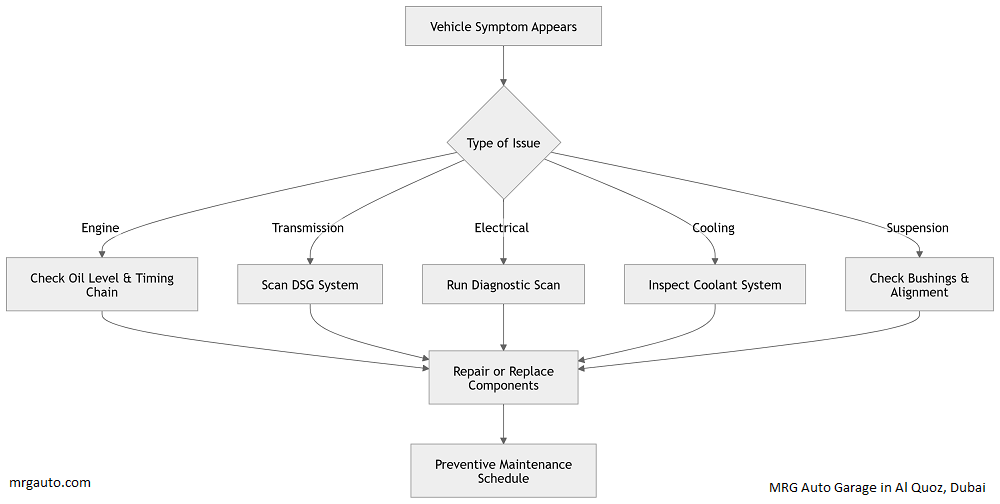
Volkswagen Tiguan Problem Diagnosis Flow
Model Year Breakdown: Which Tiguans Have More Problems?
2009–2012 Models
- High risk of timing chain tensioner failure
- Oil consumption issues
2013–2017 Models
- Improved engine reliability
- DSG issues still present
2018–Present Models
- Better build quality
- Occasional electrical and software-related glitches
Preventive Maintenance Strategy for Volkswagen Tiguan
To minimize long-term issues, we implement the following maintenance plan:
- Engine oil change every 7,000–10,000 km
- DSG service every 40,000–60,000 km
- Intake valve cleaning every 50,000–70,000 km
- Cooling system inspection annually
- Full diagnostic scan twice a year
Cost of Common Repairs
| Issue | Estimated Cost Range |
|---|---|
| Timing Chain Replacement | Medium to High |
| DSG Mechatronic Repair | High |
| Turbocharger Replacement | High |
| Carbon Cleaning | Medium |
| Water Pump Replacement | Medium |
Final Assessment: Is the Volkswagen Tiguan Reliable?
The Volkswagen Tiguan remains a strong contender in the compact SUV segment when properly maintained. While certain mechanical and electrical issues are well-documented, most can be effectively managed through preventive care and timely repairs.
Owners who adhere to strict maintenance schedules and address early warning signs experience significantly better reliability and performance over time.
The Volkswagen Tiguan combines sophistication, practicality, and driving comfort—but demands informed ownership. By understanding its most common problems and applying targeted solutions, we ensure long-term durability, optimized performance, and reduced repair costs.
This guide provides the clarity needed to maintain, diagnose, and confidently own a Volkswagen Tiguan with minimal unexpected setbacks.

Aayush is an Automobile Engineer who repairs and tests cars and their components, applying engineering principles to improve the performance, safety, and efficiency. He works on car engines, brakes, and electrical systems, utilizing computerized models to predict performance and ensure vehicles meet standards.